How to Build a Backyard Birdwatching List Without a Yard
Quick Answer: A balcony, a nearby park bench, or even a consistent window view can generate a real species list — what matters most is checking the same spot at the same times regularly, not having a private yard.
It’s easy to assume serious birdwatching needs a backyard feeder setup, but urban and apartment birders regularly build solid lists using consistent smaller spots instead.

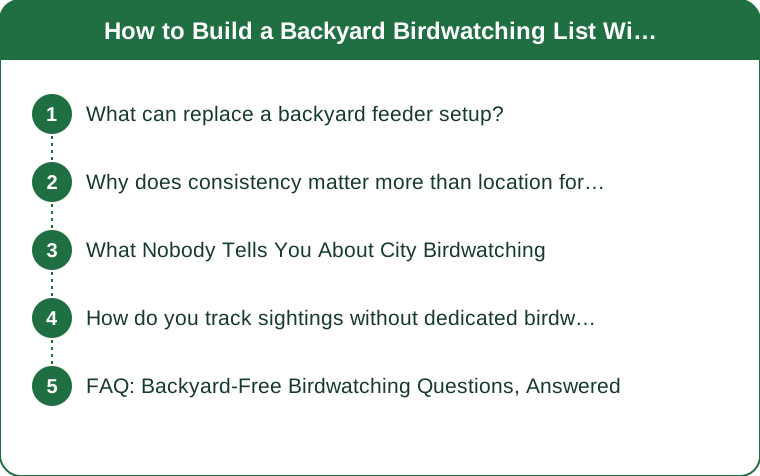
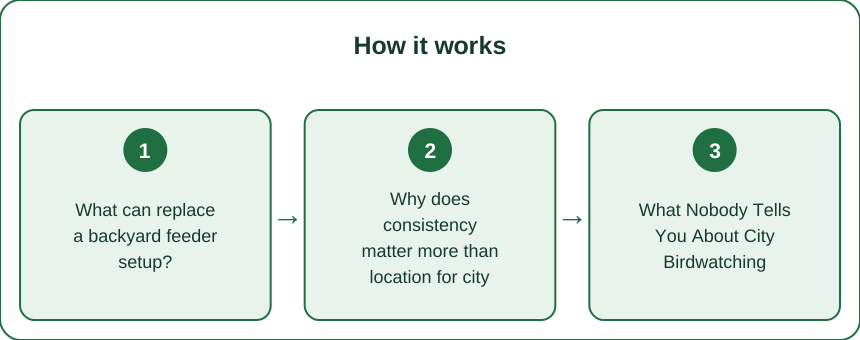
What can replace a backyard feeder setup?
A window-mounted feeder (suction-cup style) works even several floors up and attracts far more activity than people expect, since birds key in on food sources regardless of building height. A nearby park bench or green space, visited at the same time daily, functions as your patch even without any feeder at all.
Why does consistency matter more than location for city birdwatching?
Checking the exact same spot at the exact same time of day, repeatedly, reveals patterns — which species pass through at dawn versus dusk, which show up only during migration weeks — that a single visit to a bigger, unfamiliar location won’t reveal. A small, consistent patch usually outperforms an occasional visit to a big park for building an actual list over time.

What Nobody Tells You About City Birdwatching
Urban areas often have surprising migration stopover activity, especially near any patch of green space, water, or trees, because migrating birds use whatever habitat is available along their route — a single street tree or courtyard can attract species you wouldn’t expect from the surrounding density.
How do you track sightings without dedicated birdwatching land?
A basic notebook or a free app like eBird works the same whether you’re logging from a rural yard or an apartment windowsill — the data structure doesn’t care about your view. Logging consistently, even short 5-10 minute check-ins, builds a meaningful list faster than infrequent longer outings.
FAQ: Backyard-Free Birdwatching Questions, Answered
Do I need real binoculars for window or balcony birdwatching?
A basic pair (8x42 is a common starter size) helps significantly, though close feeder-watching from a window works reasonably even without them.
What time of day is best for city birdwatching?
Early morning, generally the first two hours after sunrise, tends to show the most activity regardless of location.
Can apartment birdwatching actually build a meaningful species list over time?
Yes — consistent apartment or balcony birders regularly log 40-60+ species over a year in most US regions, particularly during spring and fall migration.
TL;DR:
- A window feeder or a consistent nearby spot can replace a backyard setup
- Checking the same spot at the same time regularly beats occasional big-park visits
- Urban green spaces often see surprising migration stopover activity
- Apps like eBird work identically whether you’re logging from a yard or a windowsill
Keep Reading
This article is for general informational and styling purposes only. Fit, sizing, and product availability may vary.