What's the Best Time of Day to Go Birdwatching? The Answer Might Surprise You
Quick Answer: The first 2-3 hours after sunrise are the best window for birdwatching because most species feed actively at dawn after a night of fasting. A secondary, smaller window opens in the hour before sunset.
You’ve gone birdwatching at noon and come back with almost nothing to show for it, then wondered if the hobby just isn’t for you. It’s not you — it’s the clock. Birds have a predictable daily rhythm, and midday is their quietest, least active stretch.

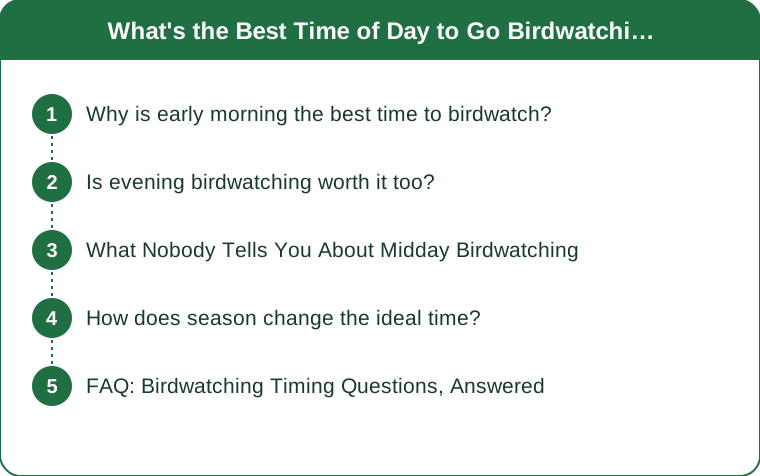
Why is early morning the best time to birdwatch?
Birds haven’t eaten since the previous evening, so dawn triggers an intense feeding period to refuel — biologists call this the ‘dawn chorus’ window. Singing also peaks at this time because the cool, still morning air carries sound farther, and males use the quiet hours to establish territory before the day’s activity picks up.
Aim to arrive 30 minutes before official sunrise and stay through the first 2-3 hours. This single window accounts for a disproportionate share of species diversity you’ll see in a full day out.
Is evening birdwatching worth it too?
Yes, but it’s a smaller window. The hour before sunset brings a secondary feeding push as birds top off energy reserves before roosting for the night. You’ll see fewer species singing compared to dawn, but it’s a solid backup if mornings don’t fit your schedule — and it’s the best time to spot owls and other crepuscular species just becoming active.

What Nobody Tells You About Midday Birdwatching
Midday isn’t actually useless — it’s just different. Between roughly 11am and 3pm, most songbirds rest in shade and go quiet, but this is exactly when raptors like hawks and eagles are most active, riding thermals that build up as the day warms. If you’re specifically hoping to spot birds of prey, midday outperforms dawn.
Midday is also the best time for water birds at ponds and lakes, since many feed steadily throughout the day regardless of the songbird schedule.
How does season change the ideal time?
In spring and fall migration seasons, dawn matters even more — migratory birds often arrive overnight and are actively refueling at first light before continuing their journey. In summer, shift slightly earlier (start before sunrise) since birds beat the heat by feeding hard in the cool hours. In winter, the whole active window compresses into a shorter midday stretch since birds need less of a head start with shorter, cooler days.
FAQ: Birdwatching Timing Questions, Answered
Is birdwatching better on cloudy or sunny days?
Overcast days often produce steadier activity throughout the morning since birds aren’t retreating to shade as early — sunny days show a sharper drop-off in activity as temperatures rise.
Does rain affect birdwatching?
Light rain rarely stops activity, but birds often feed intensely in the calm right before a storm and right after one clears — both are excellent windows if you time it right.
How long should a birdwatching session last?
For the dawn window, 2-3 hours captures most of the activity. Beyond that, returns diminish quickly until the evening window opens again.
TL;DR:
- Dawn (30 min before sunrise through 2-3 hours after) is the single best window
- Evening offers a smaller secondary feeding push before roosting
- Midday favors raptors and water birds, not songbirds
- Migration season and summer heat both push the ideal window earlier
Set an early alarm for your next outing — the birds are already up before most people even think about it.
Keep Reading
This article is for general informational and styling purposes only. Fit, sizing, and product availability may vary.