5 Mistakes Beginners Make Learning to Birdwatch by Ear
Quick Answer: The most common beginner mistake in learning bird calls by ear is trying to memorize too many species at once instead of mastering a small local set first. Start with 5-10 common birds in your own yard or park, and expand gradually — broad, shallow exposure to hundreds of calls rarely sticks.
You downloaded a bird call app with hundreds of species and started listening, hoping repetition alone would build recognition. Weeks later, most calls still sound like an undifferentiated blur, and that’s an extremely common outcome from this exact approach.

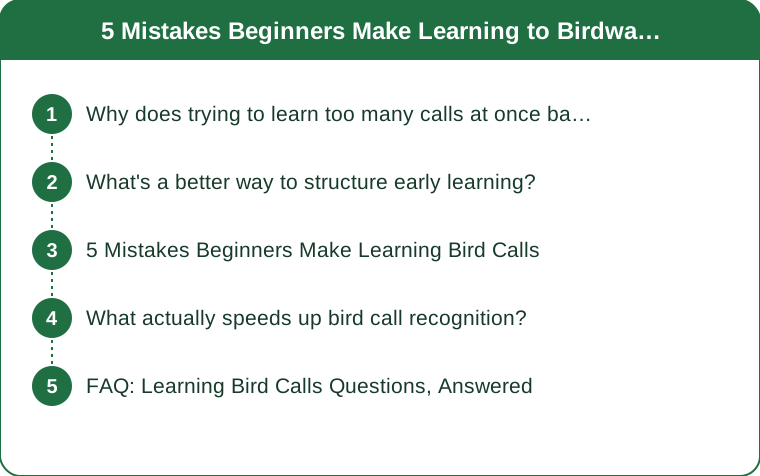
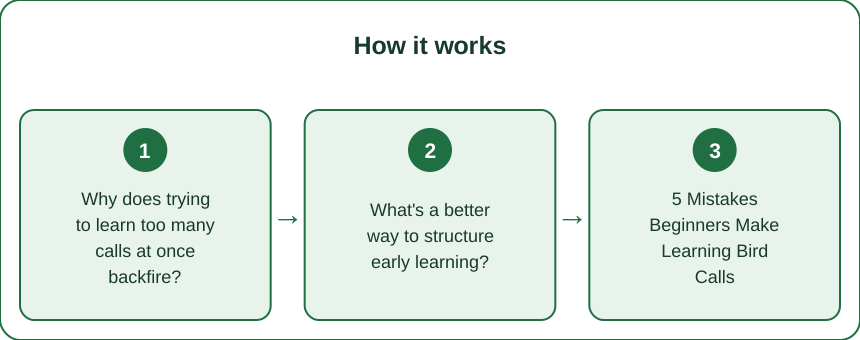
Why does trying to learn too many calls at once backfire?
Auditory pattern recognition, which is what identifying bird calls actually is, builds through repeated, focused exposure to a limited set, not broad exposure to many. Trying to hold 50-100 unfamiliar calls in memory simultaneously overwhelms the pattern-recognition process before any single call becomes truly familiar.
Birders who report the fastest early progress commonly describe starting with a small local set (5-10 species) they hear regularly, rather than a comprehensive regional list.
What’s a better way to structure early learning?
Start with the birds already present in your own yard, neighborhood, or a regular walking route — you’ll hear them repeatedly and naturally, which builds recognition faster than isolated app-based drilling alone. Pair every unfamiliar call with a visual confirmation when possible; sound-only memory is notably weaker than sound-plus-sight memory.
Expanding to a new species only after the current set feels solid (recognizable without hesitation) keeps the learning curve manageable rather than constantly diluted.

5 Mistakes Beginners Make Learning Bird Calls
1. Starting with a huge regional list instead of a local set of 5-10.
2. Never pairing sound with a visual sighting. Confirmed sight-and-sound pairs stick far better than audio alone.
3. Relying only on passive listening (a podcast or app) without active recall testing. Quizzing yourself matters more than passive exposure.
4. Ignoring mnemonic phrases. Many common calls have well-known verbal mnemonics (‘drink your tea’ for the towhee) that dramatically speed recognition.
5. Giving up after a few weeks of feeling like nothing is sticking. Recognition often arrives in a noticeable jump around week 4-6, not gradually.
What actually speeds up bird call recognition?
Mnemonic phrases for common regional birds are one of the fastest tools — matching a call’s rhythm to a memorable verbal phrase creates a mental hook that’s far stickier than the raw sound alone. Active recall practice, quizzing yourself on calls you’ve already heard rather than just re-listening passively, also meaningfully speeds retention.
Most consistent beginners report a genuine jump in confidence around week 4-6 of regular practice with a small, focused set — patience through the early flat period matters more than volume of exposure.
FAQ: Learning Bird Calls Questions, Answered
Are birding apps with call identification actually reliable for learning?
They’re useful for confirmation after you’ve made a guess, but relying on them to do the identifying for you slows down your own ear-training progress.
Does time of day matter for practicing bird call recognition?
Yes — early morning (dawn chorus) offers the richest, most varied practice window, since many species are most vocally active then.
How many bird calls can a typical beginner learn in the first season?
Most consistent beginners comfortably learn 15-25 local species by ear within a single season, focused study set by focused study set.
TL;DR:
- Trying to learn too many calls at once overwhelms pattern recognition before any one call sticks
- Start with 5-10 local, regularly-heard species instead of a broad regional list
- Pair sound with visual confirmation whenever possible — it sticks far better than audio alone
- Use mnemonic phrases and active recall quizzing, and expect a real jump around week 4-6
Pick 5 birds from your own yard or regular walking route and focus only on those for the next two weeks.
Keep Reading
This article is for general informational and styling purposes only. Fit, sizing, and product availability may vary.