When Is Bird Migration Season, and Why Timing Your Birdwatching Matters So Much
Quick Answer: Spring migration typically peaks mid-April through mid-May in most of North America; fall migration is a longer, more spread-out window from late August through October. Early morning, just after dawn, is consistently the best time of day during either season.
Most birdwatching advice focuses on gear and technique, but timing does more for your sighting count than any binocular upgrade. Migration season specifically is when species diversity spikes dramatically — if you’re not accounting for it, you’re missing the best weeks of the year.
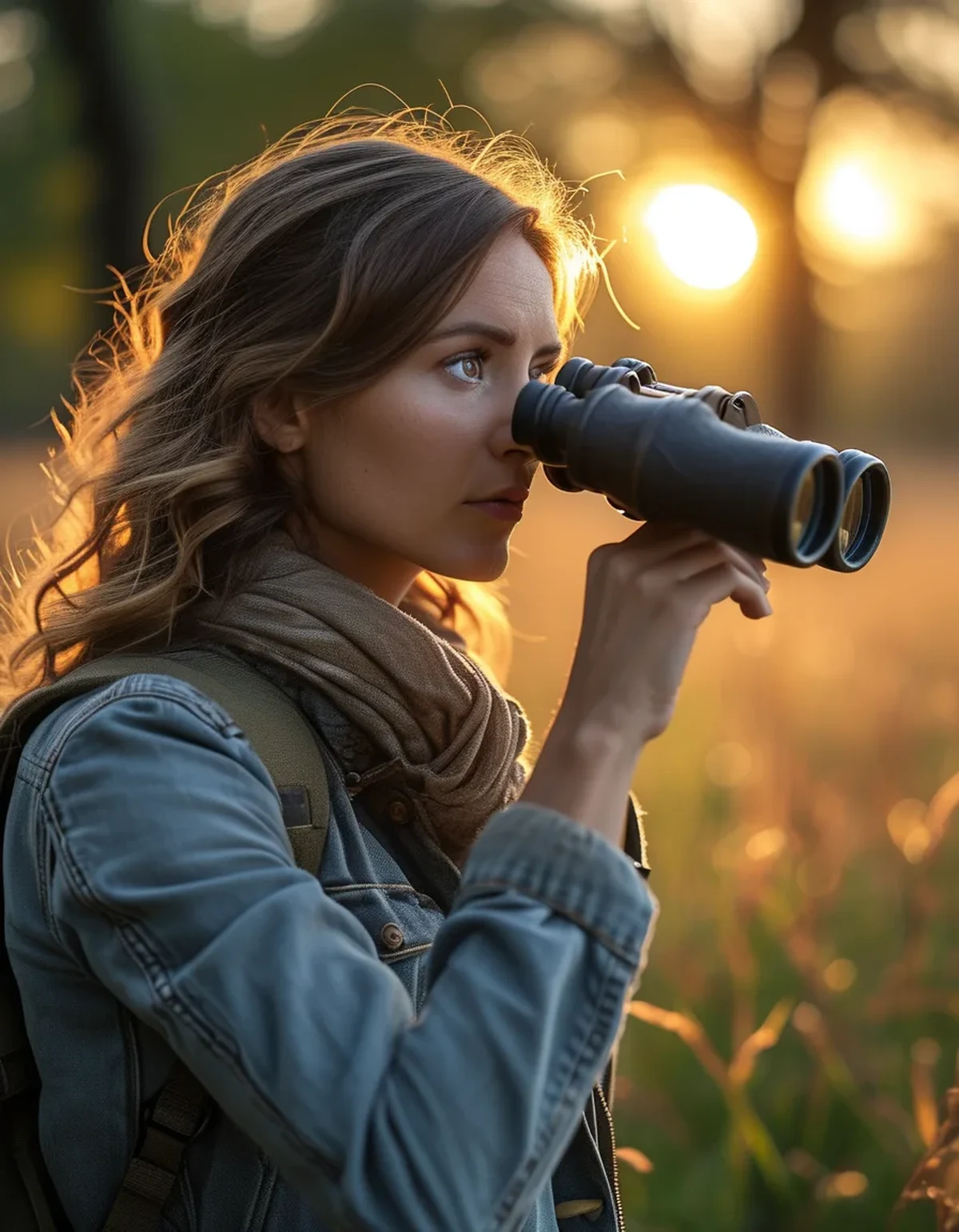
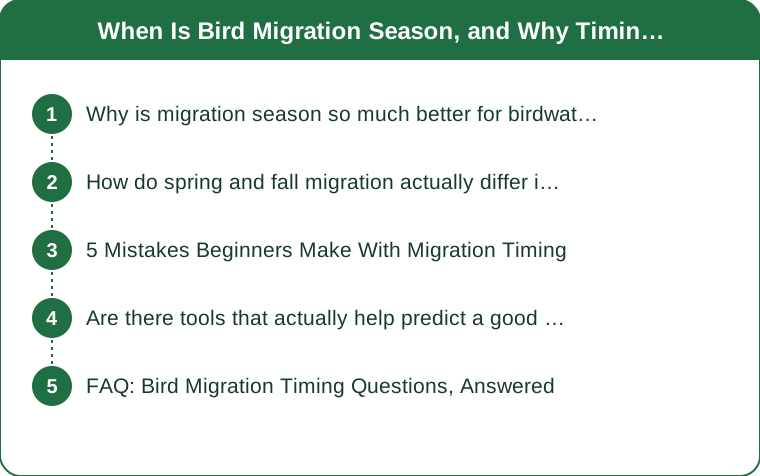
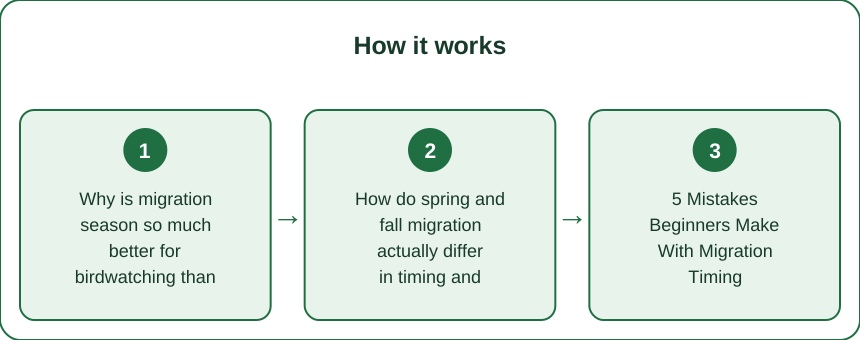
Why is migration season so much better for birdwatching than any other time of year?
Because migration temporarily concentrates species diversity far beyond what your local area supports year-round. Birds that breed much further north or south pass through as stopover points to rest and refuel, meaning a backyard that sees 15 species normally might see 40+ during a good migration week.
This window is temporary and weather-dependent, which is exactly why timing matters more here than for general birdwatching.
How do spring and fall migration actually differ in timing and experience?
Spring migration (roughly mid-April to mid-May in much of North America) is more compressed and often more dramatic — birds are in breeding plumage, singing actively, and moving with more urgency toward breeding grounds. Fall migration (late August through October) is longer and more spread out, with birds in duller non-breeding plumage, which makes fall sightings sometimes trickier to identify but the season overall more forgiving if you miss a peak week.
Many birdwatchers find spring migration more visually rewarding, while fall offers more total weeks of opportunity.
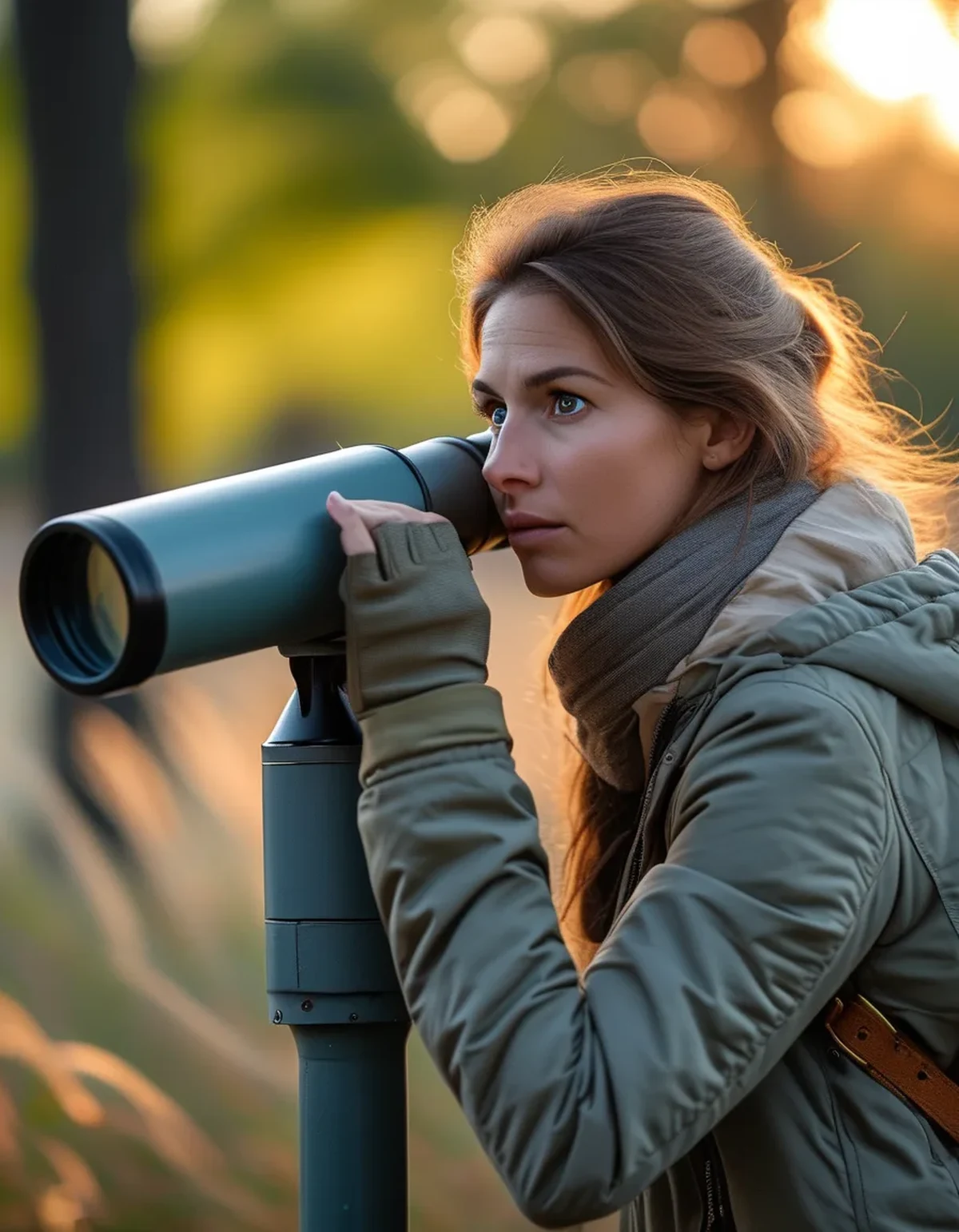
5 Mistakes Beginners Make With Migration Timing
1. Only birdwatching on weekends regardless of migration conditions — a mediocre Saturday can miss a huge Tuesday push.
2. Ignoring weather patterns. A cold front followed by clear skies often triggers a major migration ‘fallout’ with dramatically increased activity.
3. Birdwatching only midday — dawn (first 2-3 hours of light) is consistently the highest-activity window.
4. Not checking regional migration tracking tools that show real-time movement data for your area.
5. Giving up after one quiet morning instead of checking conditions and trying again within the same week.
Are there tools that actually help predict a good migration day in advance?
Yes — regional bird migration forecasting tools (based on radar data showing actual bird movement overnight) have become widely available and are genuinely useful for planning. These tools track overnight migration intensity using weather radar, since large flocks show up on the same radar systems used for storm tracking.
Checking one of these the night before or morning of a planned birdwatching trip can turn a random guess into a data-informed decision about whether that day is worth the early wake-up.
FAQ: Bird Migration Timing Questions, Answered
What time of day is best during migration season?
The first 2-3 hours after dawn consistently show the highest activity, as birds that migrated overnight are actively feeding before resting for the day.
Does weather really affect migration that much?
Significantly — a clear night following a cold front often triggers a large migration push, while headwinds or storms can suppress movement almost entirely for a night or two.
Is fall or spring migration better for beginners?
Spring is often considered more rewarding for beginners since birds are in bright breeding plumage, making identification easier and sightings more visually striking.
TL;DR:
- Spring migration peaks mid-April to mid-May; fall runs longer, late August through October
- Dawn — the first 2-3 hours of light — is the best time of day in either season
- A clear night after a cold front often triggers a major migration surge
- Migration forecasting tools using radar data can help you plan the right day, not just the right season
Check the conditions before you plan your next early morning — migration timing does more for your sightings than any gear upgrade.
Keep Reading
This article is for general informational and styling purposes only. Fit, sizing, and product availability may vary.