Can You Actually Start Birdwatching Without Binoculars? A Realistic Answer
Nearly every birdwatching guide opens with binoculars as step one, which quietly discourages a lot of curious beginners who don’t want to spend money before knowing if the hobby sticks. The truth is more forgiving than that. Here is what birdwatching without binoculars actually looks like, and when the upgrade genuinely starts to matter.

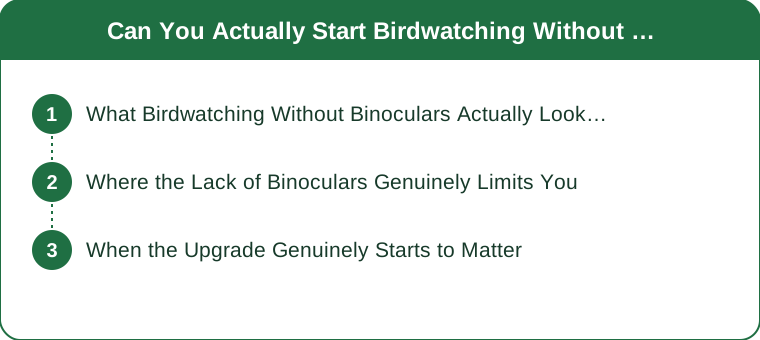
What Birdwatching Without Binoculars Actually Looks Like
The realistic starting point: the ear-based-identification-works-fine-without-optics (the learning to recognize common birds by call and song, per the birdwatching-by-ear-guide logic, requiring zero equipment at all and being a genuinely complete way to birdwatch — the sound-identification-needs-nothing-but-attention), the the-close-range-backyard-watching (the feeder birds and backyard visitors typically close enough for confident naked-eye identification of common, familiar species — the backyard-birding-is-naturally-close-range), the the-behavioral-observation-doesnt-need-magnification (the noticing feeding patterns, flight style and social behavior being observable and genuinely interesting without needing to see fine plumage detail — the behavior-watching-is-its-own-full-hobby), the the-phone-camera-zoom-as-a-stopgap (the a phone’s zoom or a basic point-and-shoot camera providing a usable, if imperfect, substitute for closer identification in a pinch — the a-phone-covers-some-of-the-gap), the the-a-notebook-and-curiosity-are-the-actual-minimum (the field notes and attention, per the birdwatching-notebook-and-record-keeping-guide logic, being the genuinely essential tools, with binoculars as an enhancement rather than a prerequisite — the the-real-minimum-equipment-is-attention-not-optics), and the reframe (the binoculars-first framing as a barrier that beginner guides often overstate — plenty of real birdwatching happens productively before that purchase).

Where the Lack of Binoculars Genuinely Limits You
The honest constraints: the distant-or-fast-moving-birds-become-guesswork (the birds at range or in quick flight becoming very difficult to confidently identify by sight alone, a real and specific limitation — the range-is-the-actual-limiting-factor), the the-fine-plumage-detail-differences-get-missed (the many similar-looking species distinguished mainly by small color or marking details invisible at naked-eye distance — the subtle-id-features-need-magnification), the the-its-harder-to-build-a-varied-life-list-fast (the expanding beyond the easily-identified common backyard species meaningfully slower without the ability to confirm more distant or difficult sightings — the list-growth-slows-without-optics), the the-water-and-shorebirds-are-especially-affected (the many wetland and shorebird species typically viewed at a distance across open water, a scenario where the lack of binoculars matters more than most other birdwatching contexts — the certain-habitats-need-optics-more-than-others), the the-social-birdwatching-groups-often-assume-binoculars (the joining an organized group birdwatching outing sometimes implicitly assuming everyone has them, which can feel excluding even if not a hard requirement — the group-context-changes-the-expectation), and the frame (the genuine limitations as distance, fine plumage detail, slower list growth, water and shorebird contexts, and group-outing norms — real constraints worth knowing about, not reasons to avoid starting).
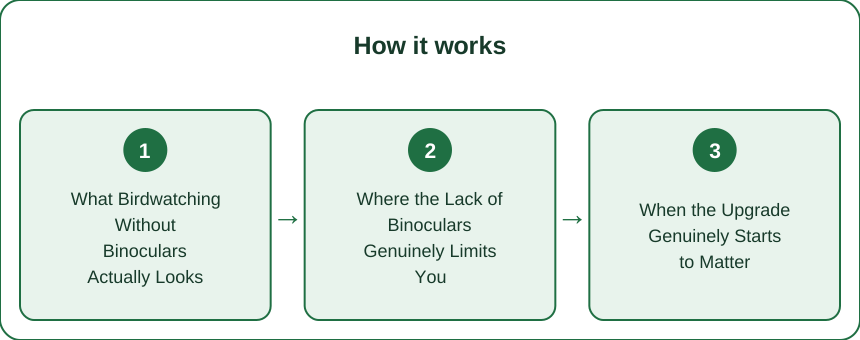
When the Upgrade Genuinely Starts to Matter
The realistic decision point: the once-backyard-species-feel-fully-familiar (the point where the easily-identified common visitors stop being new and interesting on their own, a natural signal readiness to expand range — the familiarity-signals-its-time-to-expand), the the-when-youre-drawn-to-water-or-open-habitat-birding (the wanting to explore wetlands, shorelines or open fields where distance viewing becomes the norm rather than the exception — the habitat-preference-drives-the-need), the the-when-ear-identification-hits-its-own-limit (the wanting visual confirmation to pair with an already-developing ear for calls, since the two skills reinforce each other — the pairing-skills-improves-both), the the-a-basic-pair-beats-waiting-for-the-perfect-pair (the a modest, affordable binocular pair per the birdwatching-binoculars-guide logic being far more useful than continuing to wait and save for a top-tier pair — the a-decent-basic-pair-unlocks-most-of-the-benefit), the the-borrow-or-try-before-buying (the borrowing a pair from a local birding group or nature center outing before committing to a purchase, confirming genuine ongoing interest first — the try-before-you-buy-avoids-a-wasted-purchase), and the frame (the right time to upgrade as when backyard familiarity plateaus, when water or open-habitat birding starts to interest you, or when pairing visual confirmation with ear identification feels genuinely useful — not a fixed step-one requirement before the hobby is allowed to begin).
Binoculars aren’t actually the mandatory first step beginner guides often present them as — ear-based identification, close-range backyard watching, and simply observing bird behavior are all complete, genuine ways to birdwatch with zero equipment beyond a notebook and attention. The real limitations without binoculars are distant or fast-moving birds becoming genuine guesswork, subtle plumage details that distinguish similar species going unseen, slower growth of a life list, and water or shorebird habitats where distance viewing is the norm rather than the exception. The sensible time to upgrade is when common backyard visitors stop feeling new, when open-water or open-field habitats start to interest you, or when pairing visual confirmation with an already-developing ear for calls feels genuinely useful — and even then, a modest basic pair, ideally borrowed and tried first, beats waiting and saving for a premium one before starting at all.
Keep Reading
This article is for general informational and styling purposes only. Fit, sizing, and product availability may vary.