Why Migration Season Is a Completely Different Hobby Than the Rest of the Year
Quick Answer: During spring and fall migration, birdwatching shifts from a patient, familiar-species hobby to a fast-moving, high-volume one — species you’ll never see the rest of the year pass through in narrow windows, so timing and location matter far more than they do the other ten months.
The birds you’ve been slowly learning to identify all year suddenly aren’t the only ones showing up. Migration doesn’t just add a few new species — it briefly rewrites the entire rulebook.

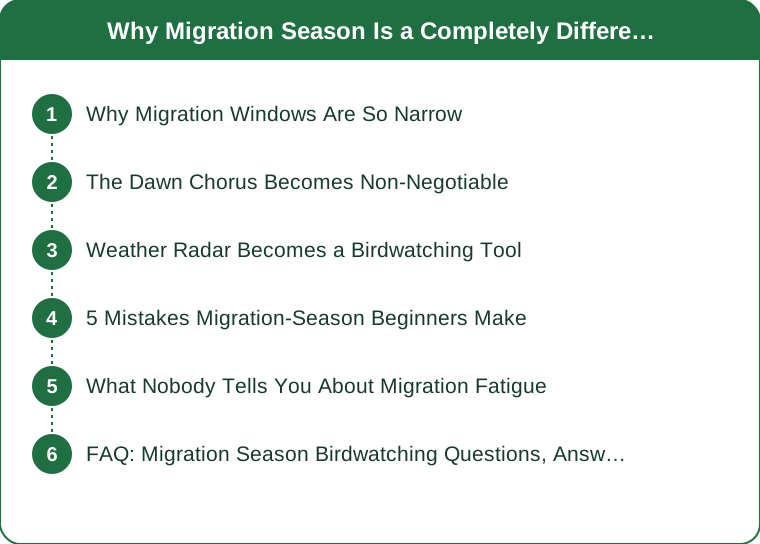
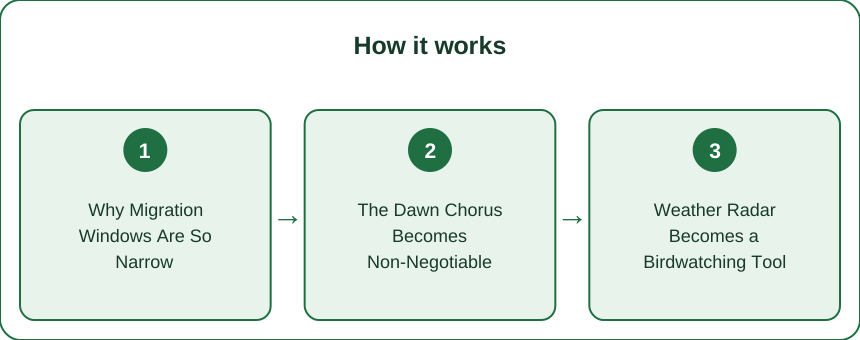
Why Migration Windows Are So Narrow
Many migratory species pass through a given region in a window of just 2-4 weeks each spring and fall, driven by weather patterns, food availability, and daylight length rather than a fixed calendar date. Missing that window can mean waiting a full year to see a species that was common in your area for just a few weeks.
The Dawn Chorus Becomes Non-Negotiable
Outside migration season, birdwatching at 9am or even midday can still be productive. During peak migration, the first 90 minutes after sunrise is dramatically more active than any other time of day, since many migratory species feed intensely after a night of flying and go quiet by mid-morning.
Weather Radar Becomes a Birdwatching Tool
Serious migration birders check weather radar the night before a planned outing, since a clear night with favorable tailwinds triggers mass migration movement, while a headwind or storm front can ground birds in your exact area the next morning — a phenomenon birders call a ‘fallout.‘

5 Mistakes Migration-Season Beginners Make
- Birdwatching at the same time of day you always have, missing the dawn window. 2) Ignoring edge habitats (forest edges, hedgerows) where tired migrants concentrate. 3) Assuming a species from last week will still be around this week. 4) Skipping cloudy or slightly rainy mornings, which can actually produce fallout events. 5) Not checking regional rare-bird alert boards, which flag unusual sightings in real time during migration.
What Nobody Tells You About Migration Fatigue
Birds that have just completed a long overnight flight are often visibly more approachable and less skittish than they’d normally be, since energy conservation outweighs typical wariness — this is both an incredible observation opportunity and a reason to keep extra distance so exhausted birds aren’t forced to expend energy fleeing unnecessarily.
FAQ: Migration Season Birdwatching Questions, Answered
How do I know when migration season starts in my area?
Regional birding organizations and apps like eBird publish historical arrival-date data for your specific area, which is far more reliable than a generic national calendar.
Is fall migration different from spring migration?
Yes — fall migration is typically slower and more spread out, with birds in duller non-breeding plumage, making identification noticeably harder than the more compressed, vividly-plumaged spring migration.
Do I need different gear for migration-season birdwatching?
Not fundamentally, though many birders find a spotting scope more useful during migration for scanning treetops and distant flocks that binoculars alone can’t resolve.
TL;DR:
- Migration windows last just 2-4 weeks per species, so timing is critical
- Dawn (first 90 minutes after sunrise) is far more productive than midday
- Weather radar and overnight wind direction predict big migration mornings
- Fatigued migrants are calmer but need extra space, not less
Migration season rewards showing up earlier and paying closer attention to weather than the rest of the birdwatching year ever asks of you.
Keep Reading
This article is for general informational and styling purposes only. Fit, sizing, and product availability may vary.